

The Source Code behind Chinese Metaphyics 中华玄学背后的源码
Published 13 Dec 2022 | Joe Ong
Two Polarities
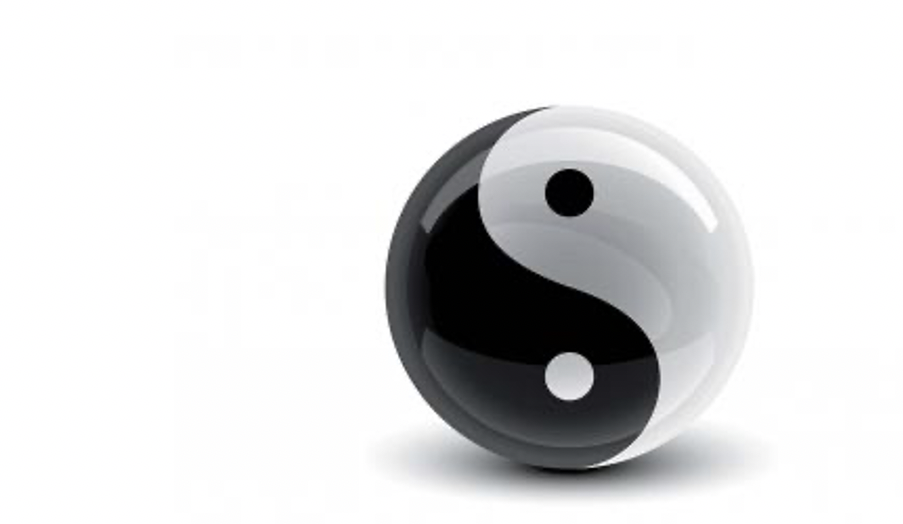
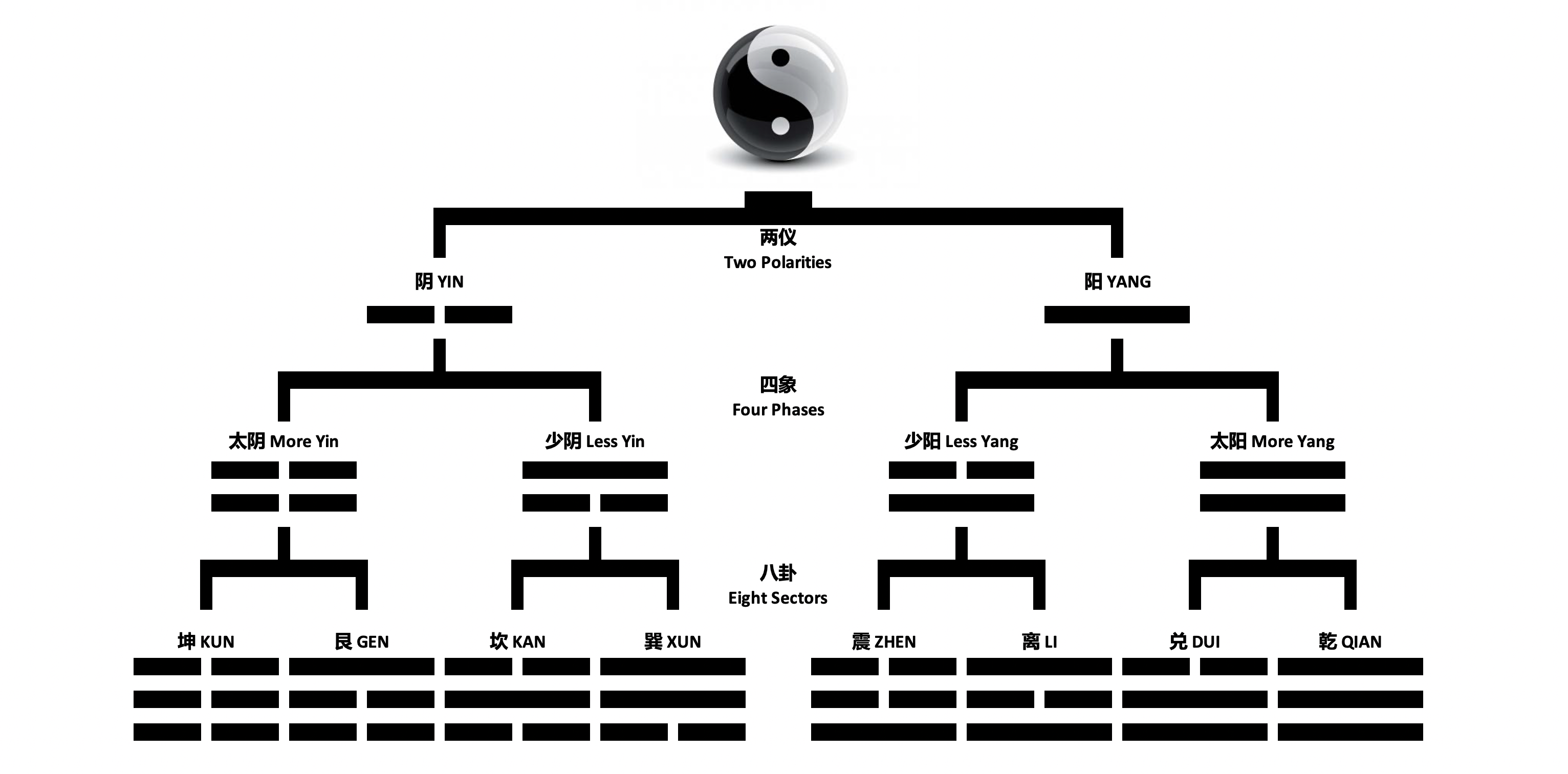
The interchange of energy in the TAI JI created two equal but opposite extreme sets of energy known as “YIN” (the largest shade of black) and “YANG” (the largest shade of white). YIN energy is represented by a broken line and YANG energy a continuous line in Chinese Metaphysics. The philosophy behind YIN YANG is the need for balance and with balance harmony can be achieved even in the most extreme of things. For example the words “Yes” and “No” need and will be meaningless without each other but they are the extreme opposite and at the same time balances each other, similar for the 1s and 0s in the binary code and the need for both day light and night fall.
Four Phases
During the transition of the interchange between YIN and YANG, four additional energy phases are created. The additional energy phases are represented with the stacking of one YIN and one YANG LINE on top of the YIN and YANG baselines. During this time, YIN is not fully YIN yet, represented by Less YIN, YANG is not fully YANG yet,represented by Less YANG. Less YIN and Less YANG will ultimately reach More YIN and More YANG. A second philosophy here is nothing is perfect and within YIN there is YANG and within YANG there is YIN denoted by the white dot in the black patch and the black dot in the white patch within the TAI JI symbol. The transition from one extreme to another can also be generated from the black dot in the white patch and the white dot in the black patch in the TAI JI. The Four Phases at this stage are four energy phases denoted by “Water”, “Wood”, “Fire” and “Metal” and also translate to the four main directions North, East, South and West respectively in Chinese Metaphysics.
Eight Sectors
The Four Phases are further broken into the Eight Sectors to see further transition phases of the energy interchange. With the next stack of lines on top of the two baselines, a fifth energy phase denoted by “Earth” and another four directions, Northwest, Northeast, Southwest and Southeast making the Eight Sectors (N, S, E, W, NW, NE, SW and SE) and the Chinese Compass is complete. These Eight Sectors are also known as the base EIGHT TRIGRAMS QIAN, DUI, LI, ZHEN, XUN, KAN, GEN, KUN that represent the Cosmic Energy transition in Heaven, Earth and Men forms the foundation of BA ZI, FENG SHUI and DIVINATION.
Sixty Four Hexagrams
We can see additional details are provided with each level of energy breakdown starting from YIN YANG to the EIGHT TRIGRAM when we stack more lines on top of YIN YANG. In I CHING, the BOOK OF CHANGE which is believed to include all possible permutation of any worldly affair; the Eight Trigrams is stack on top of each other to form the 64 Hexagram to see even more granular details for higher divination details and accuracy. The 64 Hexagrams structure bears resemblance to the 64 bit computing architecture.
两仪
太极中的能量交换创造了两个相等但相反的极端能量集,称为“阴”(最大的黑色阴影)和“阳”(最大的白色阴影)。 阴气在中华易学中用虚线表示,阳气用实线表示。 阴阳背后的哲学是平衡,即使在最极端的事物中也可以实现平衡和谐。 举些例子,“是”和“否”这两个词需要并且没有彼此就没有意义,但它们是极端相反的,同时又相互平衡,类似有二进制代码中的1 和0和白天与夜晚。
四象
在阴阳转换的过程中,会产生四个额外的能量阶段。额外的能量阶段以在阴阳基线之上叠加一根阴线和一根阳线来表示。在此期间,阴未完全为太阴,以少阴为代表,阳未完全为太阳,以少阳为代表。少阴和少阳最终会达到太阴与太阳。这里的第二个哲学是没有什么是完美的,阴中有阳,阳中有阴,由太极符号中黑色补丁中的白点和白色补丁中的黑点表示。从一个极端到另一个极端的过渡也可以从太极中的白斑中的黑点和黑斑中的白点产生。这个阶段的四相是指“水”,“木”,“火”,“金”的四个能量相,在中华玄学中也分别译为北、东、南、西四个主要方位。
八卦
四象进一步分为八卦,以查看能量交换的进一步过渡阶段。 下一组线位于两条基线之上,第五个能量阶段由“土”表示,另外四个方向,西北、东北、西南和东南构成八个方位,完成中华指南针里的八个方向(北、南、东、西、西北、东北 , 西南和东南) 。 这八个方位也被称为基本八卦乾、兑、离、震、巽、坎、艮、坤,代表宇宙的天、地、人能量转换,是八字、风水和占卜易学的基础。
六十四卦
当我们在阴阳之上堆叠更多线条时,我们可以看到从阴阳到八卦的每个能量分解级别都提供了额外的细节《易经》被认为包括任何世俗事物的所有可能排列;八卦相互堆叠形成 64 卦,以查看更精细的细节以实现高占卜准确性。64 卦结构与 64 位计算架构有相似之处。